


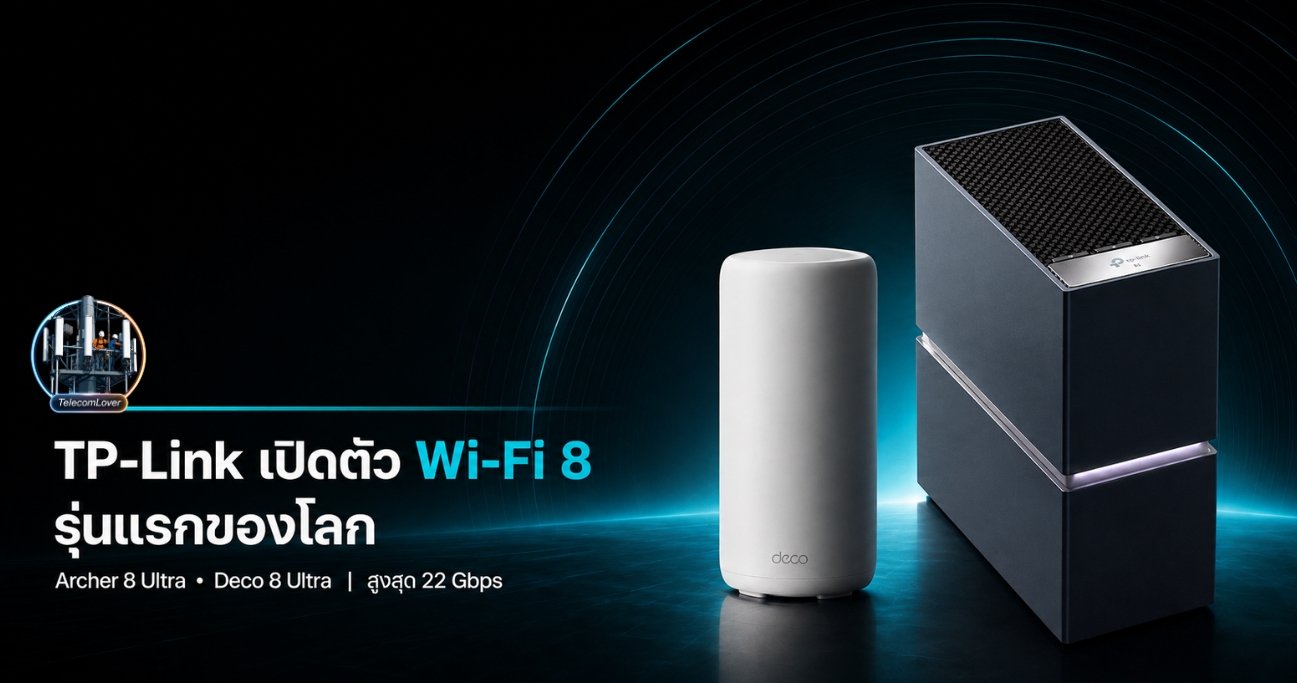
TP-Link เปิดตัว Archer 8 Ultra และ Deco 8 Ultra Wi-Fi 8 รุ่นแรกของโลก สูงสุด 22 Gbps พร้อม StabilityEngine และพอร์ต 10G
TP-Link ใช้เวที IFA 2026 เปิดตัวไลน์อัป Wi-Fi 8 สำหรับผู้ใช้ทั่วไป ซึ่งนับเป็นชุดผลิตภัณฑ์ Wi-Fi 8 ชุดแรกของโลก นำโดย Archer 8 Ultra BN19000 หรือ Archer BN800 เราเตอร์ระดับ 19 Gbps และ Deco 8 Ultra BN22000 หรือ Deco BN85 ระบบ Mesh ระดับ 22 Gbps
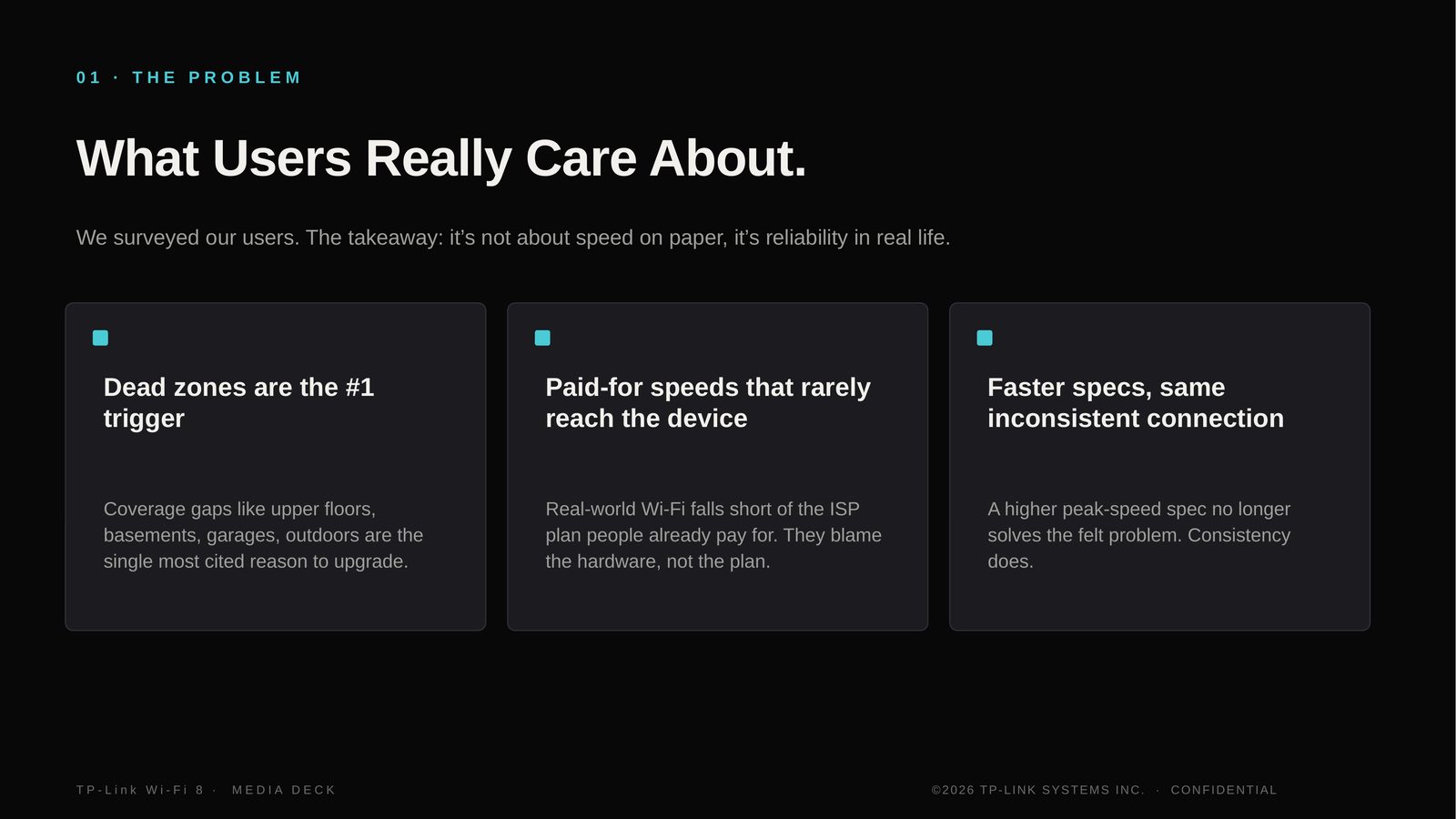
บ้านที่มีคนสตรีมเกม คนหนึ่งประชุมผ่านวิดีโอคอล เด็กเล่นเกมออนไลน์ ขณะที่กล้องวงจรปิดและอุปกรณ์ IoT ยังส่งข้อมูลอยู่ตลอด คือสถานการณ์ที่ทำให้เราเตอร์ต้องจัดการทั้งสัญญาณและคิวรับส่งข้อมูลไปพร้อมกัน หากบริหารทรัพยากรไม่ดี ความเร็วแพ็กเกจที่จ่ายไว้ก็ไม่ช่วยให้การใช้งานได้ต่อเนื่องมีประสิทธิภาพ
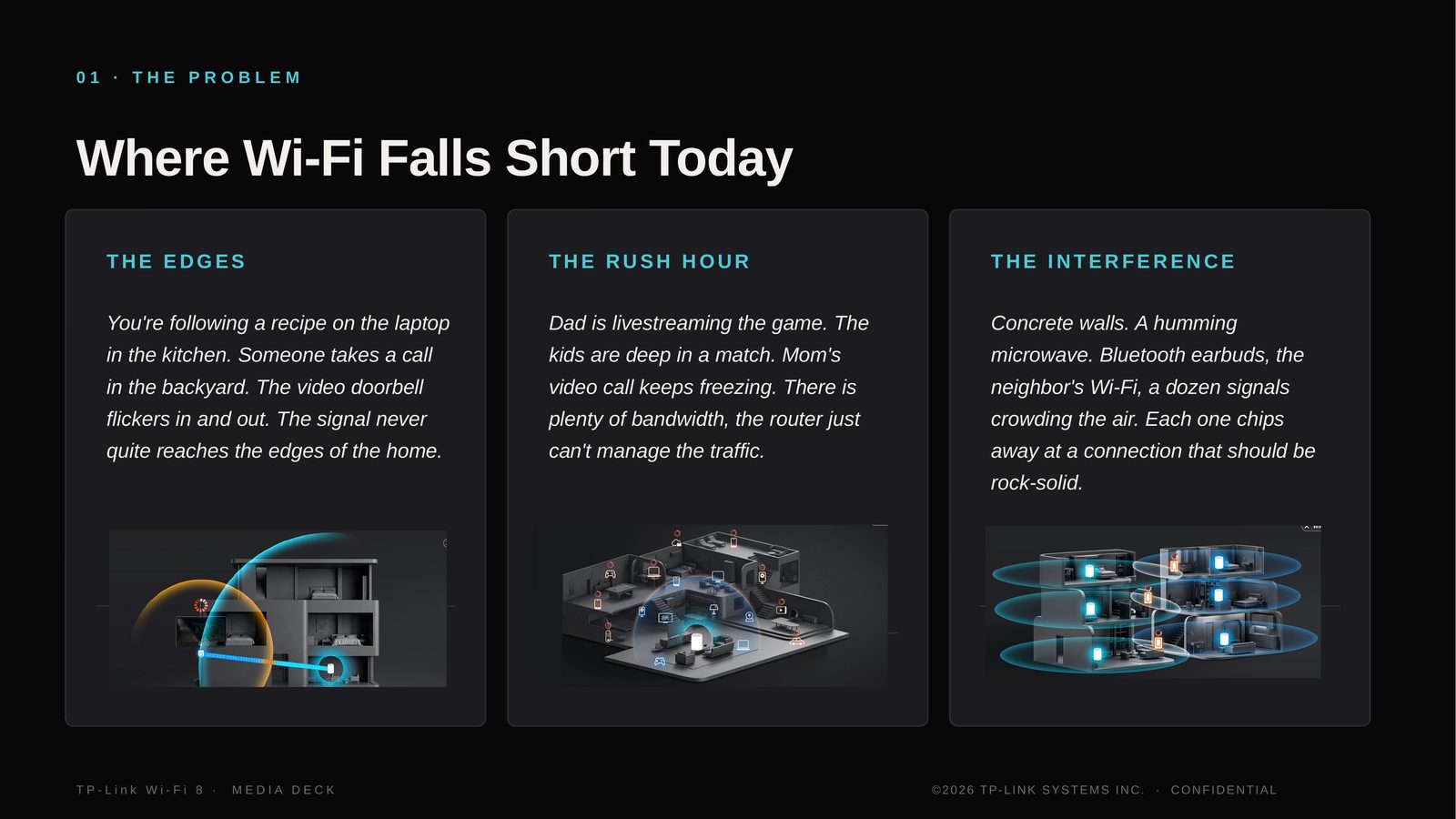
Wi‑Fi 8 หรือ IEEE 802.11bn จึงมีเป้าหมายที่ Ultra High Reliability หรือการรักษาความต่อเนื่องของการเชื่อมต่อในสภาพแวดล้อมจริง TP-Link นำแนวคิดนี้มาใช้กับชุดเทคโนโลยี Wi‑Fi 8 StabilityEngine ซึ่งเน้นความสม่ำเสมอของการเชื่อมต่อมากกว่าการทำความเร็วสูงสุดเพียงอย่างเดียว
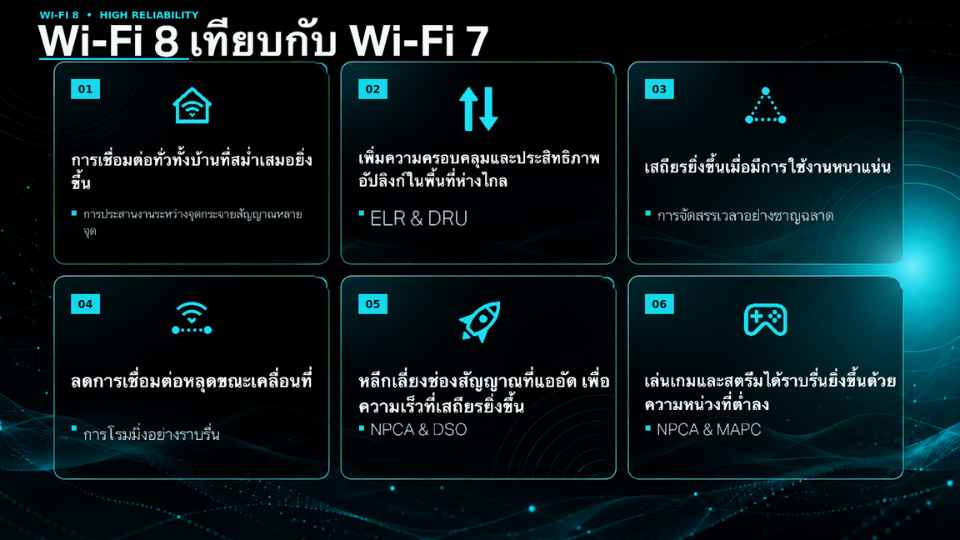
Wi‑Fi 8 ต่างจาก Wi‑Fi 7 ตรงไหน จุดเปลี่ยนอยู่ที่ความเสถียร
หากดูเฉพาะเพดานทางเทคนิค ทั้ง Wi‑Fi 8 และ Wi‑Fi 7 รองรับช่องสัญญาณกว้างสุด 320 MHz, 4096-QAM และอัตรา PHY สูงสุด 46 Gbps เท่ากัน ความแตกต่างจึงไม่ได้อยู่ที่การเพิ่มความเร็ว แต่เป็นการบริหารช่องสัญญาณและทรัพยากรให้เครือข่ายยังทำงานได้ต่อเนื่อง เมื่อมีอุปกรณ์จำนวนมาก สัญญาณรบกวน หรืออุปกรณ์เคลื่อนที่ไป-มาในระบบพร้อมกัน
Wi‑Fi 8 เพิ่มการประสานงานระหว่าง Access Point หลายจุด ใช้ DSO และ NPCA เพื่อจัดสรรช่องสัญญาณตามการใช้งานและหลีกเลี่ยงช่องที่แออัด ขณะที่ ELR และ DRU ช่วยให้อุปกรณ์ที่อยู่ไกลหรือมีกำลังส่งต่ำสื่อสารกลับมายังเราเตอร์ได้ชัดขึ้น ส่วนระบบ Mesh ได้ประโยชน์จากการโรมมิ่งและการประสานงานระหว่างโหนดที่ต่อเนื่องกว่าเดิม
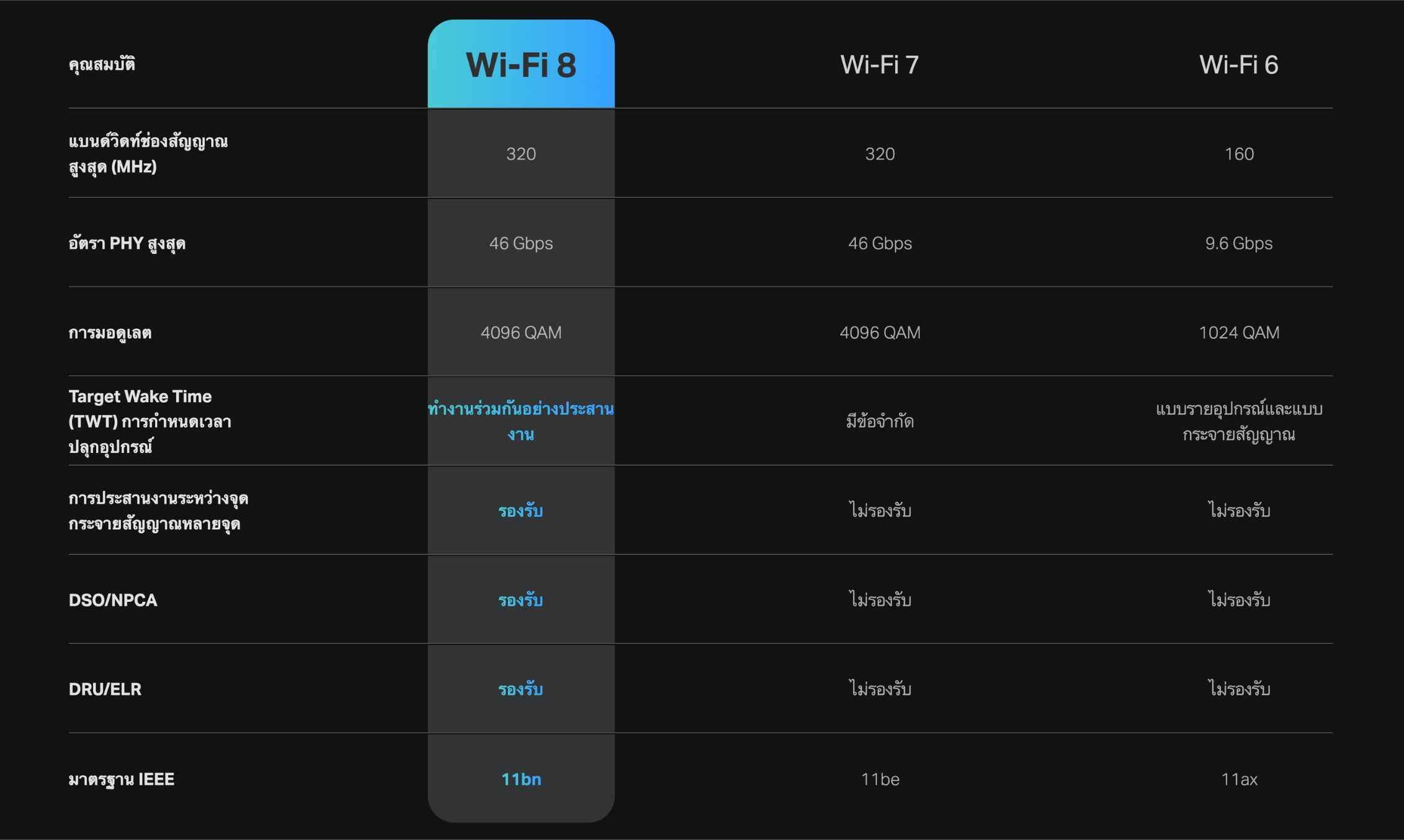
TP-Link ระบุผลทดสอบในห้องปฏิบัติการว่า เมื่อเทียบกับ Wi‑Fi 7 ที่ระดับความแรงสัญญาณเท่ากัน Wi‑Fi 8 ให้ปริมาณการรับส่งข้อมูลสูงขึ้นได้สูงสุด 30% จัดการสัญญาณรบกวนได้ดีขึ้นสูงสุด 24% และเพิ่มประสิทธิภาพ Mesh ระหว่างจุดกระจายสัญญาณสองจุดได้สูงสุด 15% ตัวเลขดังกล่าวเป็นผลการทดสอบของ TP-Link ผลลัพธ์จริงอาจแตกต่างกันตามเราเตอร์ อุปกรณ์ลูกข่าย เฟิร์มแวร์ และสภาพแวดล้อม
| ประเด็น | Wi‑Fi 7 | Wi‑Fi 8 |
|---|---|---|
| ช่องสัญญาณ / การมอดูเลต / PHY สูงสุด | 320 MHz / 4096-QAM / 46 Gbps | 320 MHz / 4096-QAM / 46 Gbps |
| การประสานงานระหว่างหลาย AP | ไม่รองรับตามตารางของ TP-Link | รองรับ |
| การจัดการช่องสัญญาณหนาแน่น | ไม่มี DSO/NPCA | รองรับ DSO/NPCA |
| พื้นที่ห่างไกลและอัปลิงก์ | ไม่มี DRU/ELR | รองรับ DRU/ELR |
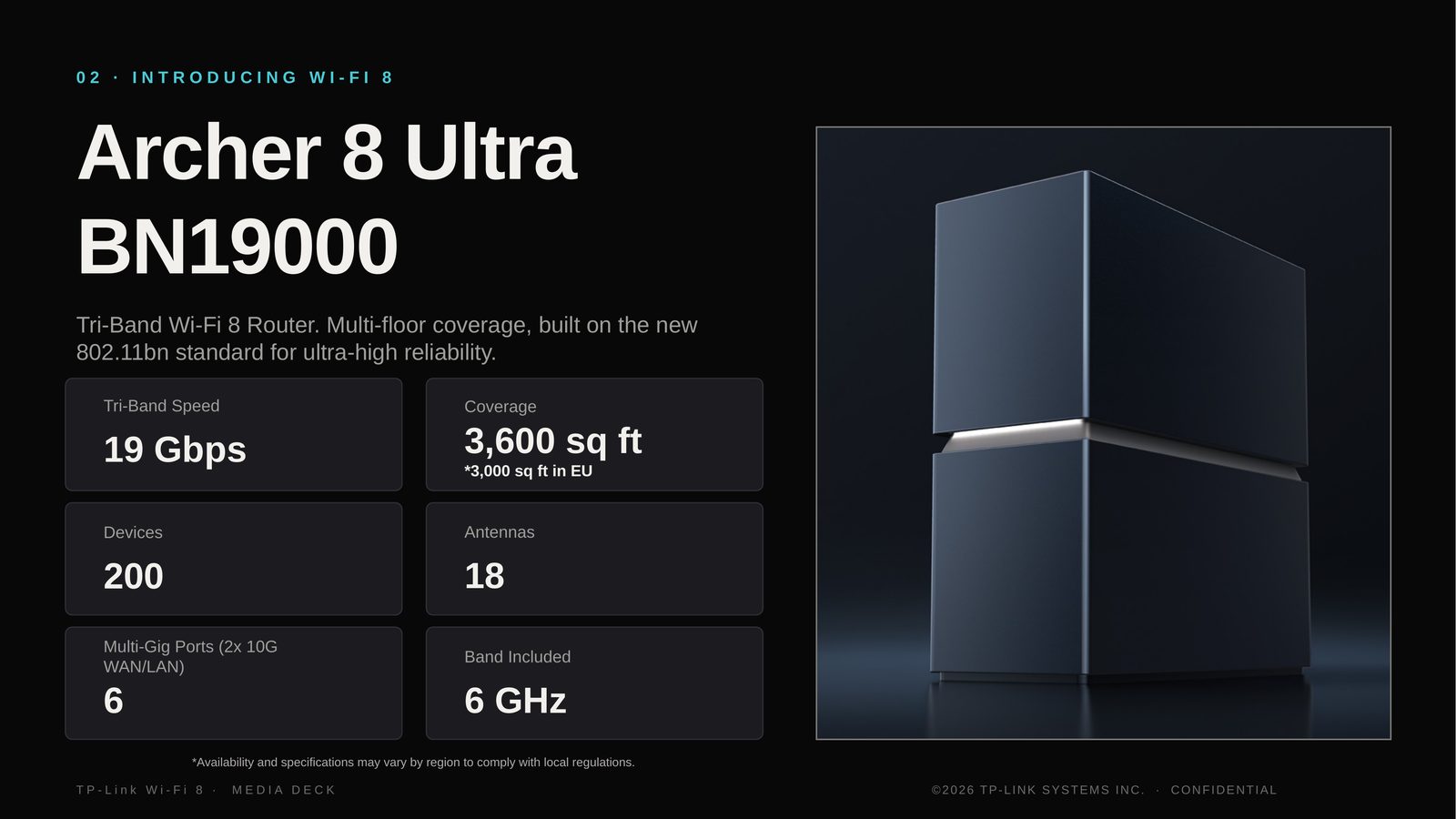
Archer 8 Ultra เราเตอร์ Wi‑Fi 8 ระดับ 19 Gbps ดีไซน์มินิมอล พร้อมวางในพื้นที่เปิด
Archer 8 Ultra BN19000 เป็นเราเตอร์ Wi-Fi 8 แบบ Tri-Band รองรับย่าน 6 GHz และทำความเร็วไร้สายรวมสูงสุด 19 Gbps ภายในติดตั้งเสาอากาศประสิทธิภาพสูง 18 เสา รองรับอุปกรณ์ได้สูงสุด 200 เครื่อง
ด้านการเชื่อมต่อมีพอร์ต Multi-Gig รวม 6 พอร์ต โดย 2 พอร์ตเป็น 10G WAN/LAN เหมาะกับบ้านที่มีอินเทอร์เน็ต Multi-Gig, NAS, Workstation หรือสวิตช์ 10GbE TP-Link ระบุพื้นที่สัญญาณไว้ที่ 3,600 ตารางฟุต หรือราว 334 ตารางเมตร ขณะที่สเปกยุโรประบุ 3,000 ตารางฟุต
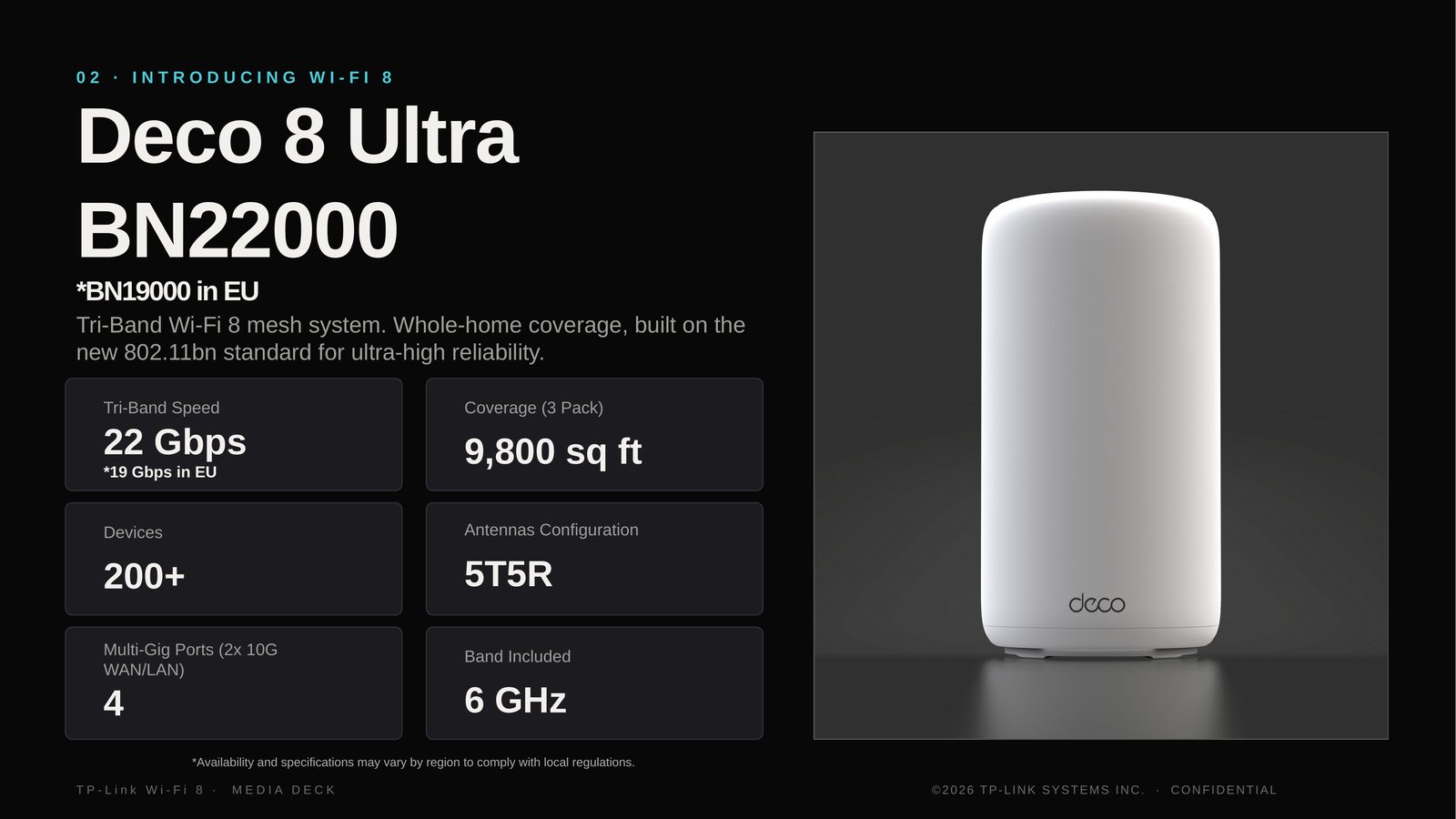
Deco 8 Ultra Mesh 22 Gbps สำหรับบ้านหลังใหญ่
Deco 8 Ultra BN22000 เป็นระบบ Mesh Wi-Fi 8 แบบ Tri-Band รองรับย่าน 6 GHz และทำความเร็วไร้สายรวมสูงสุด 22 Gbps ชุด 3-Pack ระบุพื้นที่สัญญาณสูงสุด 9,800 ตารางฟุต หรือประมาณ 910 ตารางเมตร พร้อมรองรับอุปกรณ์มากกว่า 200 เครื่อง
ตัวเครื่องใช้การจัดวางเสาอากาศแบบ 5T5R และมีพอร์ต Multi-Gig 4 พอร์ต โดย 2 พอร์ตเป็น 10G WAN/LAN สำหรับยุโรป TP-Link ระบุชื่อรุ่นเป็น Deco BN85 และความเร็วรวมสูงสุด 19 Gbps ตามข้อกำหนดของภูมิภาค ส่วนสเปกของประเทศไทยยังต้องรอประกาศ
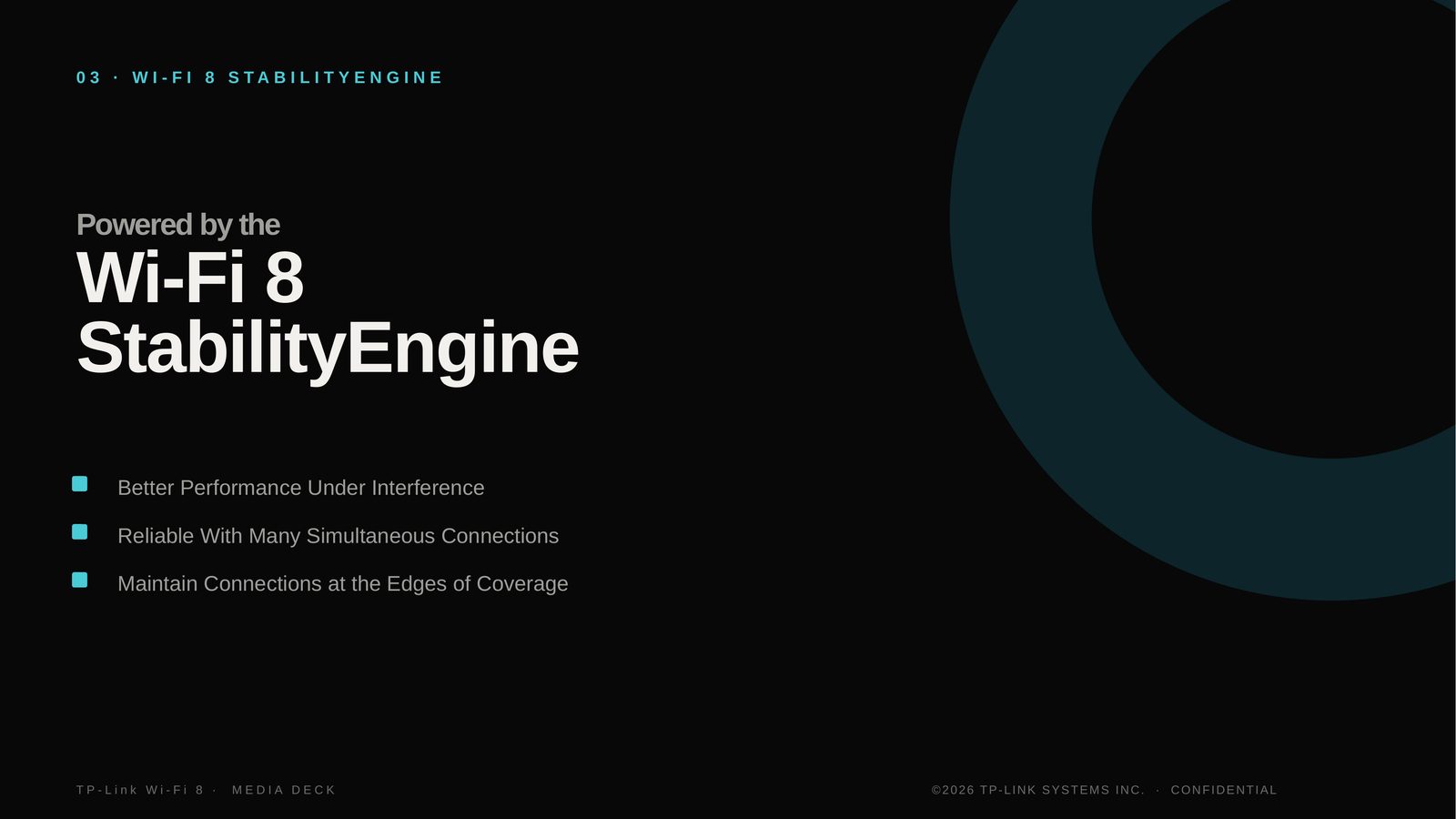
StabilityEngine เบื้องหลัง Wi‑Fi 8 ที่เสถียรขึ้น รองรับอุปกรณ์เชื่อมต่อจำนวนมาก
เรื่องสัญญาณรบกวน TP-Link ใช้ Unequal Modulation (UEQM) ให้แต่ละ Spatial Stream เลือกระดับการมอดูเลตตามคุณภาพสัญญาณของตัวเอง ขณะที่ New Modulation and Coding Schemes (New MCS) ช่วยให้ความเร็วค่อย ๆ ลดลงเมื่อสัญญาณอ่อน แทนที่สตรีมที่มีปัญหาจะดึงการเชื่อมต่อทั้งหมดลง TP-Link ระบุว่า Throughput มีความสม่ำเสมอขึ้นสูงสุด 24% เมื่อเทียบกับ Wi-Fi 7 ภายใต้สัญญาณรบกวน
สำหรับบ้านที่มีอุปกรณ์ทำงานพร้อมกัน Dynamic Sub-band Operation (DSO) จะจัดสรรความกว้างช่องสัญญาณให้เหมาะกับแต่ละอุปกรณ์ ส่วน Non-Primary Channel Access (NPCA) เปิดให้ระบบใช้ช่องส่วนอื่นเมื่อช่องหลักมีภาระหรือถูกรบกวน ช่วยลดการรอคิวบนช่องเดียวกัน
ส่วนอุปกรณ์ที่อยู่ไกลจากเราเตอร์ เช่น กริ่งประตู กล้องริมรั้ว หรือโน้ตบุ๊กในห้องปลายสุด จะได้ประโยชน์จาก Enhanced Long Range (ELR) และ Distributed Resource Units (DRU) โดย DRU รวมกำลังส่ง Uplink ที่มีจำกัดไว้ใน Resource Unit ที่แคบลง เพื่อให้ Access Point รับสัญญาณจากปลายทางได้ชัดขึ้น TP-Link ระบุว่าความไวในการรับสัญญาณบริเวณปลายขอบเพิ่มขึ้นได้ราว 1–3 dB เมื่อเทียบกับ Wi-Fi 7
ดีไซน์ที่แตกต่าง แต่ผสานลงตัวกับทุกมุมบ้าน
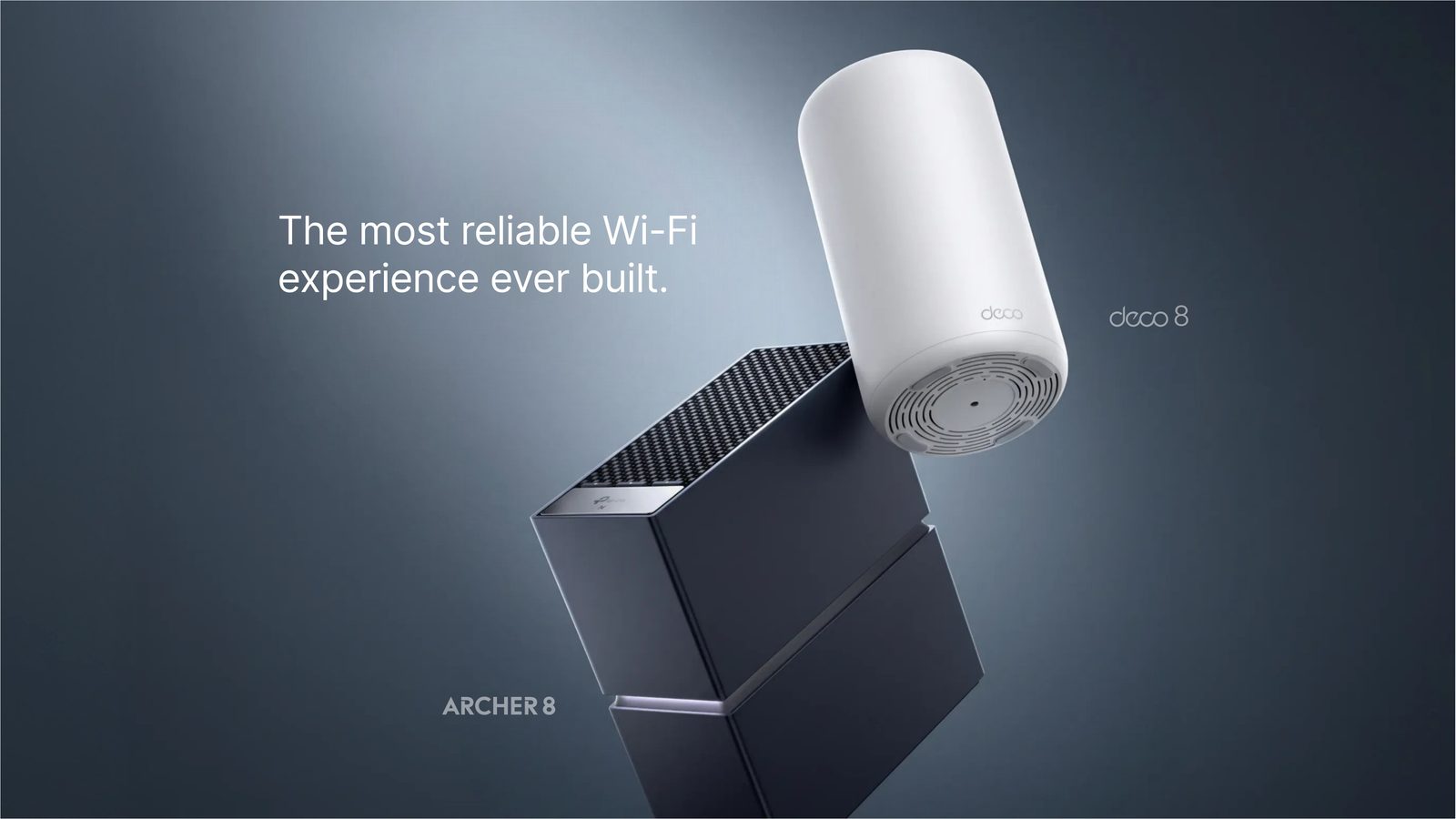
TP-Link นำเสนอแนวทางการออกแบบที่แตกต่างกันอย่างชัดเจนสำหรับทั้งสองรุ่น Archer 8 Ultra มาในรูปทรงเรขาคณิตทรงสูงที่ให้ความรู้สึกเรียบหรูดุจงานสถาปัตยกรรม โดดเด่นด้วยตะแกรงหน้าแบบ Micro-Weave ทูโทน และไฟแสดงสถานะ Emissive Light ที่ส่องสว่างนุ่มนวลเพียงจุดเดียว ภายในซ่อนเสาอากาศทรงพลังถึง 18 ต้นและระบบระบายความร้อนไว้อย่างแนบเนียน ทำให้ตัวเครื่องภายนอกดูคลีนตา ปราศจากเสายื่นเกะกะ
ในขณะที่ Deco 8 Ultra เลือกใช้ดีไซน์ที่เน้นความกลมกลืนกับพื้นที่อยู่อาศัย ตัวเครื่องสีขาวมาพร้อมเส้นสายที่โค้งมน ผสมผสานพื้นผิวด้านเข้ากับฝาบนแบบเงาได้อย่างลงตัว ทำให้สามารถนำไปจัดวางคู่กับเฟอร์นิเจอร์ชิ้นโปรดได้ง่าย ไม่ว่าจะตั้งไว้ในห้องนั่งเล่น ห้องทำงาน หรือมุมพักผ่อนของบ้าน
แม้ Archer 8 Ultra จะถูกออกแบบมาเพื่อตั้งโชว์อย่างโดดเด่น และ Deco 8 Ultra จะเน้นการกลืนไปกับสภาพแวดล้อม แต่ทั้งสองรุ่นต่างสะท้อนแนวคิดเดียวกัน นั่นคือการทลายกรอบเดิมๆ ที่ต้องซ่อนเราเตอร์ไว้หลังตู้หรือมุมอับ เพราะการนำอุปกรณ์มาจัดวางไว้ในพื้นที่เปิดโล่ง ไร้สิ่งกีดบัง คือกุญแจสำคัญที่ช่วยให้เครือข่ายกระจายสัญญาณได้อย่างเต็มประสิทธิภาพสูงสุด
Gary Chang หัวหน้าทีมออกแบบอุตสาหกรรมของ TP-Link ได้กล่าวสรุปถึงแนวคิดนี้ไว้อย่างน่าสนใจว่า “เราไม่ได้แค่สร้างอุปกรณ์เครือข่ายอีกต่อไป แต่เรากำลังออกแบบสิ่งที่เข้ากับบ้านของคุณต่างหาก”
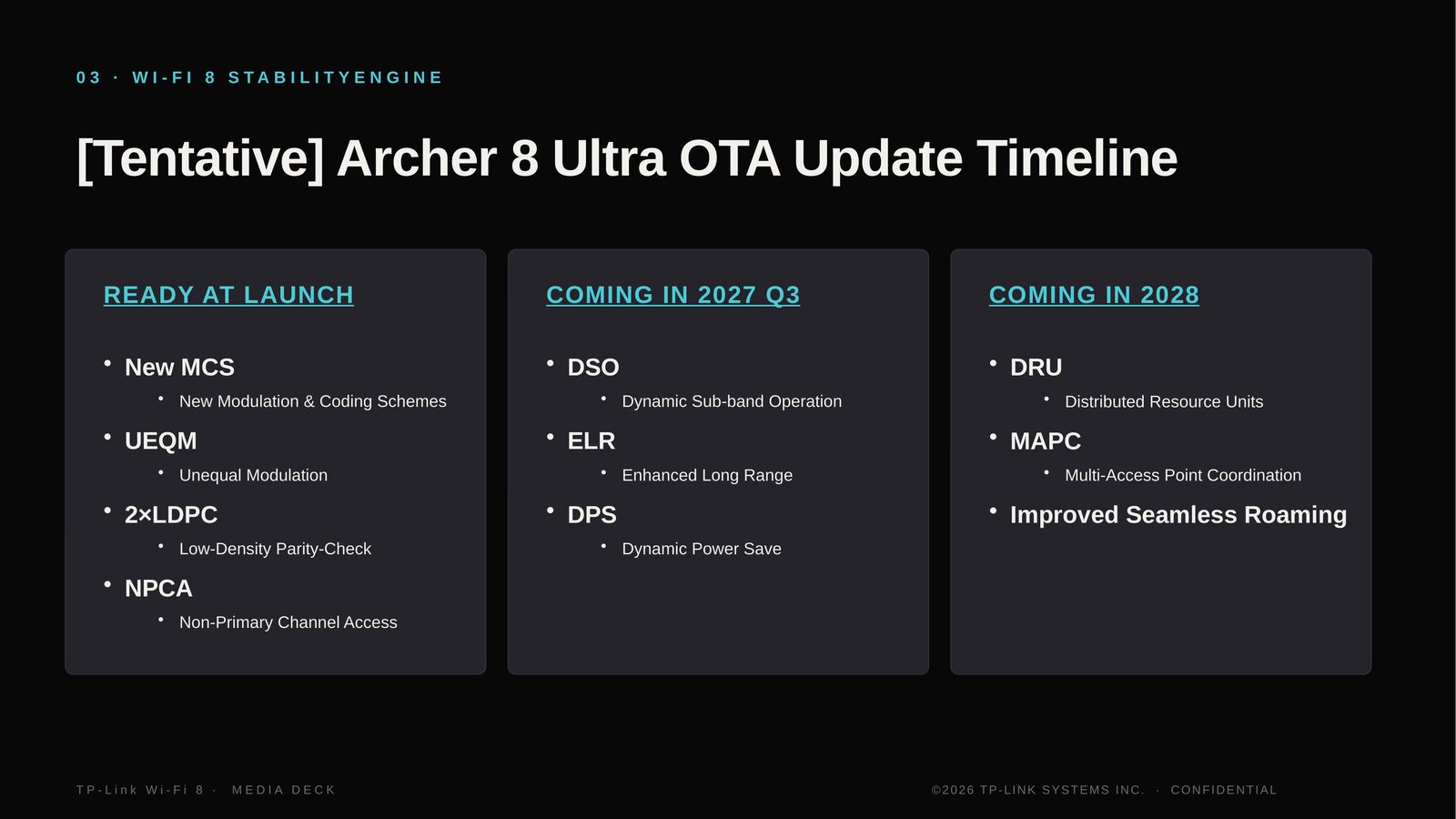
ฟีเจอร์ Wi‑Fi 8 เตรียมอัปเดตต่อเนื่องผ่าน OTA
TP-Link เตรียมเพิ่มความสามารถของ StabilityEngine ผ่านการอัปเดต OTA โดย New MCS, UEQM, 2×LDPC และ NPCA จะพร้อมใช้งานตั้งแต่ช่วงเปิดตัว ขณะที่ DSO, ELR และ Dynamic Power Save มีกำหนดอัปเดตในไตรมาส 3 ปี 2027 ส่วน DRU, Multi-Access Point Coordination และ Improved Seamless Roaming อยู่ในแผนการพัฒนาสำหรับปี 2028
กำหนดการดังกล่าวเป็น Tentative หรือแผนเบื้องต้นสำหรับ Archer 8 Ultra และอาจมีการปรับตามขั้นตอนการพัฒนา รวมถึงความพร้อมในแต่ละภูมิภาค ผู้ที่เริ่มใช้งานตั้งแต่ช่วงเปิดตัวจะได้รับฟีเจอร์ชุดแรก พร้อมรับการอัปเดตเพิ่มเติมเพื่อขยายความสามารถของระบบต่อเนื่องในอนาคต
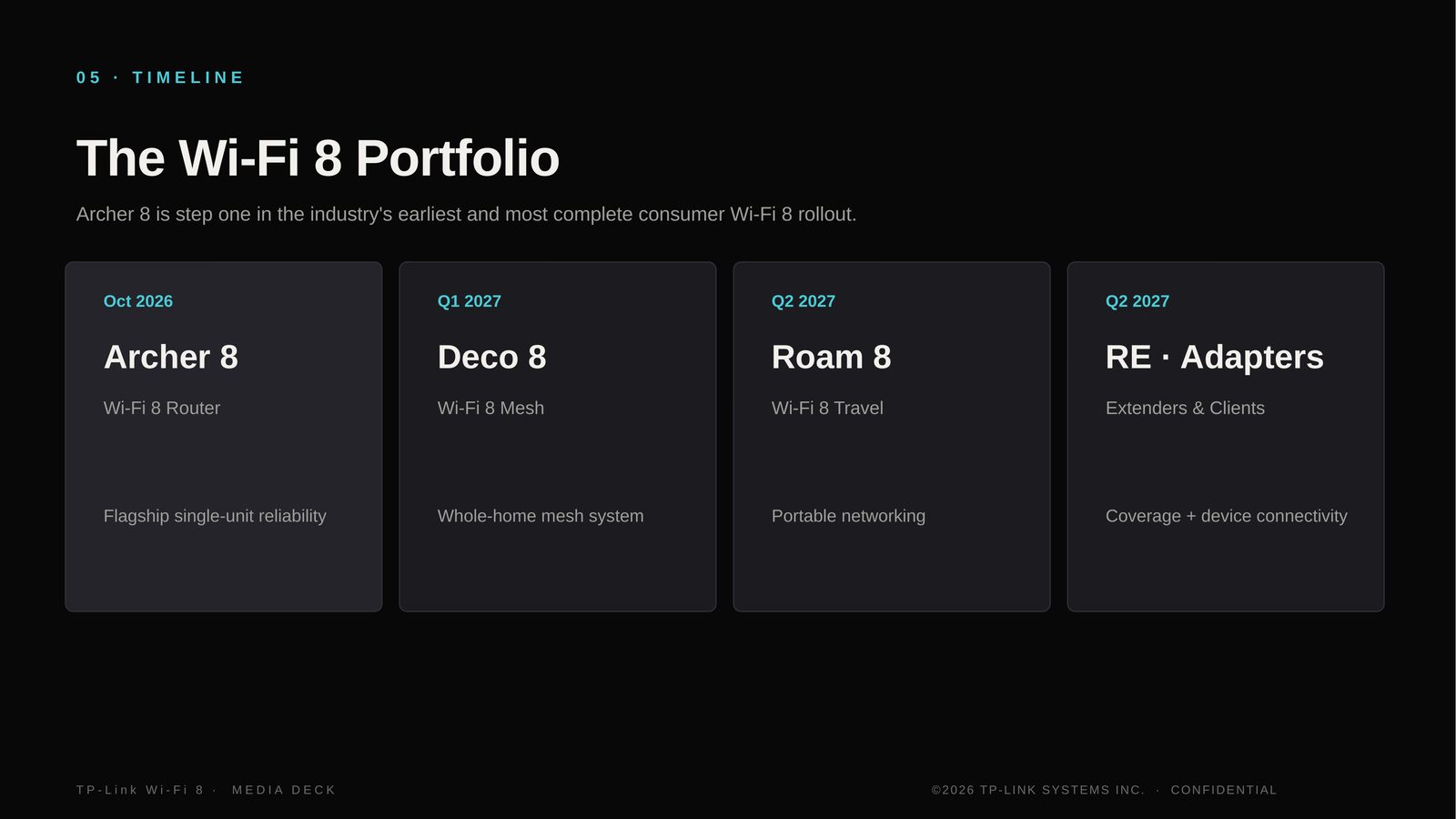
Archer 8 มาก่อน ตามด้วย Deco 8 และผลิตภัณฑ์อื่นๆที่รองรับ Wi-Fi 8
TP-Link วาง Archer 8 เป็นรุ่นแรกที่จะเริ่มทำตลาดในเดือนตุลาคม 2026 ตามด้วย Deco 8 ในไตรมาส 1 ปี 2027 ส่วน Roam 8 สำหรับการเชื่อมต่อแบบพกพา รวมถึง RE และอะแดปเตอร์ อยู่ในแผนไตรมาส 2 ปี 2027
TP-Link เตรียมจัด Global Online Launch วันที่ 30 กันยายน 2026 เพื่อเปิดเผยรายละเอียดเต็มของ Archer 8 Ultra และ Deco 8 Ultra ขณะที่ราคา กำหนดวางจำหน่าย และสเปกสำหรับประเทศไทยรอการประกาศอย่างเป็นทางการ
Archer 8 Ultra และ Deco 8 Ultra จึงเป็นสองรุ่นที่น่าจับตาสำหรับคนที่กำลังจะอัปเกรด Wi‑Fi ในบ้าน ให้รองรับอุปกรณ์และการใช้งานที่หลากหลายขึ้น ทั้งคู่รองรับย่าน 6 GHz มีพอร์ต 10G และเน้นการรักษาความต่อเนื่องของการเชื่อมต่อ เมื่อมีอุปกรณ์หลายประเภททำงานพร้อมกัน
ผู้สนใจสามารถติดตามข่าวสารล่าสุดเกี่ยวกับ Wi‑Fi 8 ได้ที่
https://www.tp-link.com/th/wifi8/
ส่วนรีวิวใช้งานจริง อดใจรออีกนิด เพราะ TelecomLover เตรียมทดสอบและรีวิวผลิตภัณฑ์ Wi‑Fi 8 เป็นรายแรกของไทย!
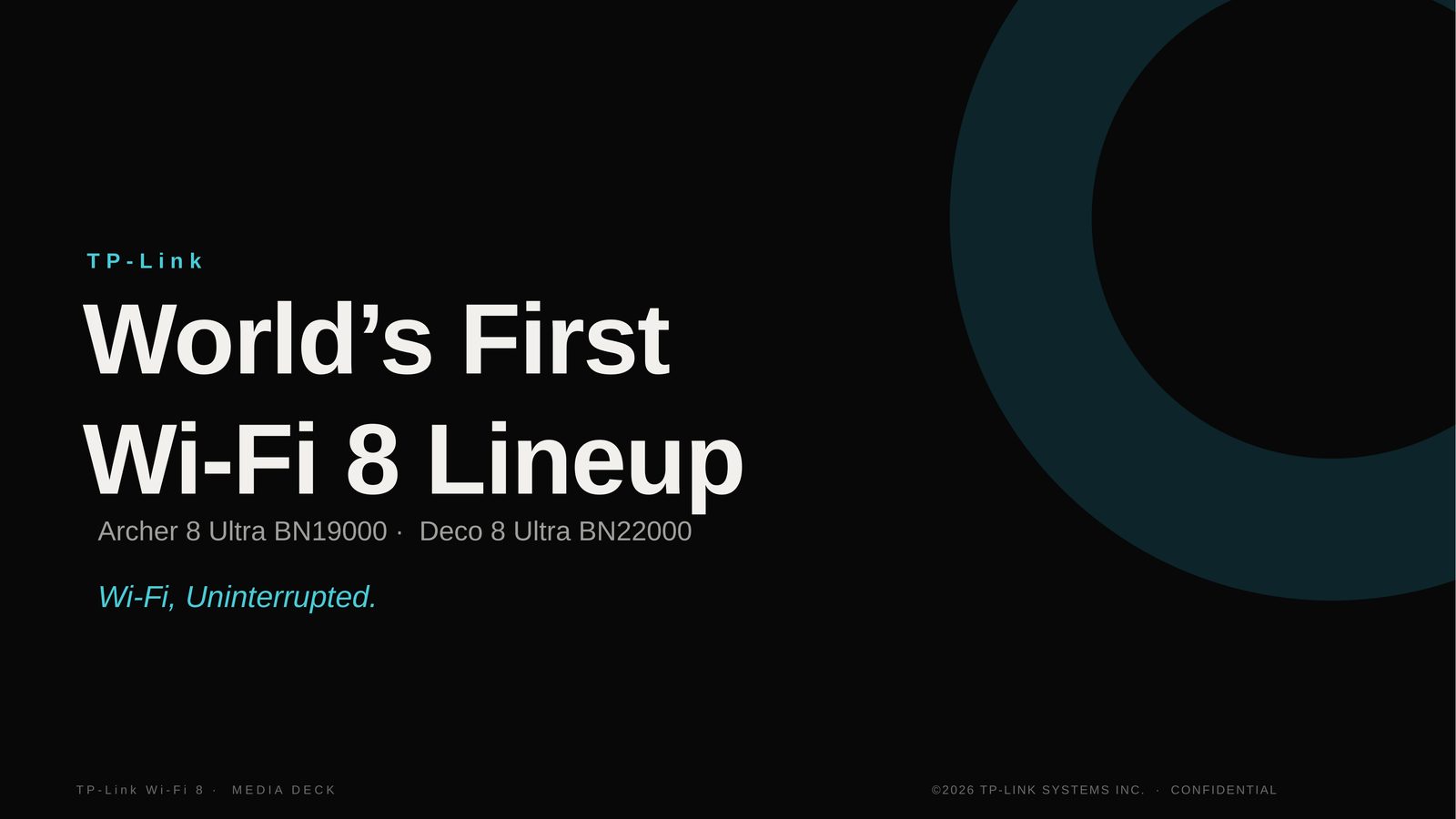
TP-Link Unveils World’s First Consumer Wi-Fi 8 Lineup, Led by Archer 8 Ultra and Deco 8 Ultra With Speeds up to 22 Gbps
TP-Link has unveiled what it describes as the world’s first consumer Wi-Fi 8 product lineup at IFA 2026. The range is led by the Archer 8 Ultra BN19000, also known as the Archer BN800, offering combined wireless speeds of up to 19 Gbps, and the Deco 8 Ultra BN22000, or Deco BN85, a mesh system capable of reaching up to 22 Gbps.
Modern home networks increasingly need to handle several demanding activities at once, from game streaming and video conferencing to online gaming, security cameras and connected IoT devices. In these situations, headline broadband speed alone may not guarantee smooth performance if the router cannot efficiently manage signal conditions and data traffic across multiple devices.
Wi-Fi 8, officially known as IEEE 802.11bn, is being developed around the concept of Ultra-High Reliability, with a stronger focus on maintaining consistent connections under real-world conditions. TP-Link is bringing this approach to its new products through the Wi-Fi 8 StabilityEngine, prioritising stable throughput and responsiveness rather than peak speed alone.
Wi-Fi 8 vs Wi-Fi 7: What Changes in Practice
TP-Link’s Wi-Fi 8 approach focuses on reliability and continuity rather than peak speed alone. Compared with Wi-Fi 7, the company highlights improvements in several areas:
- More consistent connectivity throughout the home through coordination between multiple access points
- Greater coverage and uplink performance at the far edge with Enhanced Long Range (ELR) and Distributed Resource Units (DRU)
- Improved stability under heavy traffic through smarter resource scheduling
- Fewer interruptions while moving with seamless roaming
- Better use of available channels through Non-Primary Channel Access (NPCA) and Dynamic Sub-band Operation (DSO)
- Smoother gaming and streaming with lower latency through NPCA and Multi-Access Point Coordination (MAPC)
Archer 8 Ultra Delivers Tri-Band Wi-Fi 8 at up to 19 Gbps
The Archer 8 Ultra BN19000 is a tri-band Wi-Fi 8 router supporting the 6 GHz band and combined wireless speeds of up to 19 Gbps. It houses 18 high-performance internal antennas and is designed to support as many as 200 connected devices.
Its wired connectivity comprises six Multi-Gig ports, including two 10G WAN/LAN ports. This makes it suitable for homes equipped with Multi-Gig broadband, network-attached storage, high-performance workstations or 10GbE switches.
TP-Link lists wireless coverage of up to 3,600 square feet, or approximately 334 square metres, while the European specification states coverage of 3,000 square feet.
The router adopts a tall geometric form intended to resemble a piece of modern architecture. Its exterior features a two-tone Micro-Weave grille and a single softly illuminated Emissive Light indicator. The 18 antennas and cooling system are concealed within the chassis, giving the router a clean appearance without external antennas.
Deco 8 Ultra Brings 22 Gbps Mesh Connectivity to Larger Homes
The Deco 8 Ultra BN22000 is a tri-band Wi-Fi 8 mesh system with 6 GHz support and combined wireless speeds of up to 22 Gbps. A three-unit package is rated to cover as much as 9,800 square feet, or approximately 910 square metres, while supporting more than 200 connected devices.
Each unit features a 5T5R antenna configuration and four Multi-Gig ports, two of which support 10G WAN/LAN connectivity.
In Europe, the system is identified as the Deco BN85 and carries a combined speed rating of up to 19 Gbps to comply with regional requirements. Specifications for Thailand have yet to be announced.
Unlike the more prominent architectural design of the Archer 8 Ultra, the Deco 8 Ultra is intended to blend naturally into living spaces. Its white housing combines rounded lines, a matte body and a glossy upper surface, allowing the device to sit alongside furniture in living rooms, offices or other areas of the home.
The two products follow different visual approaches, but share the same objective: encouraging users to place networking equipment in open areas where fewer physical obstructions can interfere with signal distribution.
“We’re no longer just creating networking devices; we’re designing things that belong in your home,” said Gary Chang, TP-Link’s industrial design team leader.
StabilityEngine Targets More Consistent Connections
TP-Link’s StabilityEngine incorporates several Wi-Fi 8 technologies designed to improve performance under interference, at longer distances and when numerous devices are connected simultaneously.
Unequal Modulation, or UEQM, allows each spatial stream to select a modulation level based on its individual signal quality. New Modulation and Coding Schemes, or New MCS, are designed to reduce speeds more gradually as signal strength declines, preventing one problematic stream from pulling down the entire connection.
TP-Link says these technologies can deliver throughput consistency improvements of up to 24% compared with Wi-Fi 7 under interference.
Dynamic Sub-band Operation, or DSO, assigns appropriate amounts of channel bandwidth to individual devices. Non-Primary Channel Access, or NPCA, enables the system to use other parts of a channel when the primary portion is congested or affected by interference, reducing the time devices spend waiting on a single channel.
Devices located farther from the router, including doorbells, perimeter cameras and notebooks in distant rooms, are expected to benefit from Enhanced Long Range and Distributed Resource Units.
DRU concentrates limited uplink transmission power into a narrower resource unit, helping an access point detect signals from distant devices more clearly. TP-Link says this can improve reception sensitivity at the edge of the coverage area by approximately 1–3 dB compared with Wi-Fi 7.
Additional Wi-Fi 8 Features Will Arrive Through OTA Updates
TP-Link plans to expand StabilityEngine functionality through over-the-air software updates. New MCS, UEQM, 2×LDPC and NPCA are scheduled to be available at launch.
DSO, Enhanced Long Range and Dynamic Power Save are planned for the third quarter of 2027. Distributed Resource Units, Multi-Access Point Coordination and Improved Seamless Roaming are currently on the development roadmap for 2028.
This schedule is tentative and applies to the Archer 8 Ultra. Availability may change depending on development progress and regional readiness. Early adopters will receive the initial feature set at launch, followed by additional capabilities through future updates.
Archer 8 Ultra Arrives First, Followed by Deco 8 Ultra
TP-Link plans to begin marketing the Archer 8 Ultra in October 2026, making it the company’s first Wi-Fi 8 product to reach the market. The Deco 8 Ultra is scheduled to follow in the first quarter of 2027.
The portable Roam 8, along with Wi-Fi 8 range extenders and adapters, is planned for the second quarter of 2027.
TP-Link will disclose full details of the Archer 8 Ultra and Deco 8 Ultra during its Global Online Launch on September 30, 2026. Pricing, local specifications and availability in Thailand have yet to be confirmed by TP-Link Thailand.
With 6 GHz support, 10G ports and hardware designed for high-speed home networking, the Archer 8 Ultra and Deco 8 Ultra are positioned for households using Multi-Gig broadband, NAS systems or large numbers of simultaneously connected devices.