

Samsung เผยวิศวกรรม Galaxy Z Fold8 น้ำหนัก 201 กรัม ใช้ Flex Titanium และปรับชิ้นส่วนระดับ 0.001 กรัม ส่วน Fold8 Ultra เพิ่มแบตเป็น 5,000 mAh ที่น้ำหนัก 215 กรัม
Samsung เปิดเผยเบื้องหลังการออกแบบ Galaxy Z Fold8 ที่มีน้ำหนัก 201 กรัม ลดลง 52 กรัมจาก Galaxy Z Fold5 โดยพัฒนาทั้งโครงสร้างหน้าจอ บานพับ วัสดุ และการจัดวางชิ้นส่วนภายใน ทีมวิศวกรตรวจทานชิ้นส่วนประมาณ 270 รายการ และชิ้นส่วนประกอบย่อยกว่า 180 ชนิด ซึ่งบางชิ้นปรับลดน้ำหนักได้ละเอียดถึงระดับ 0.001 กรัม
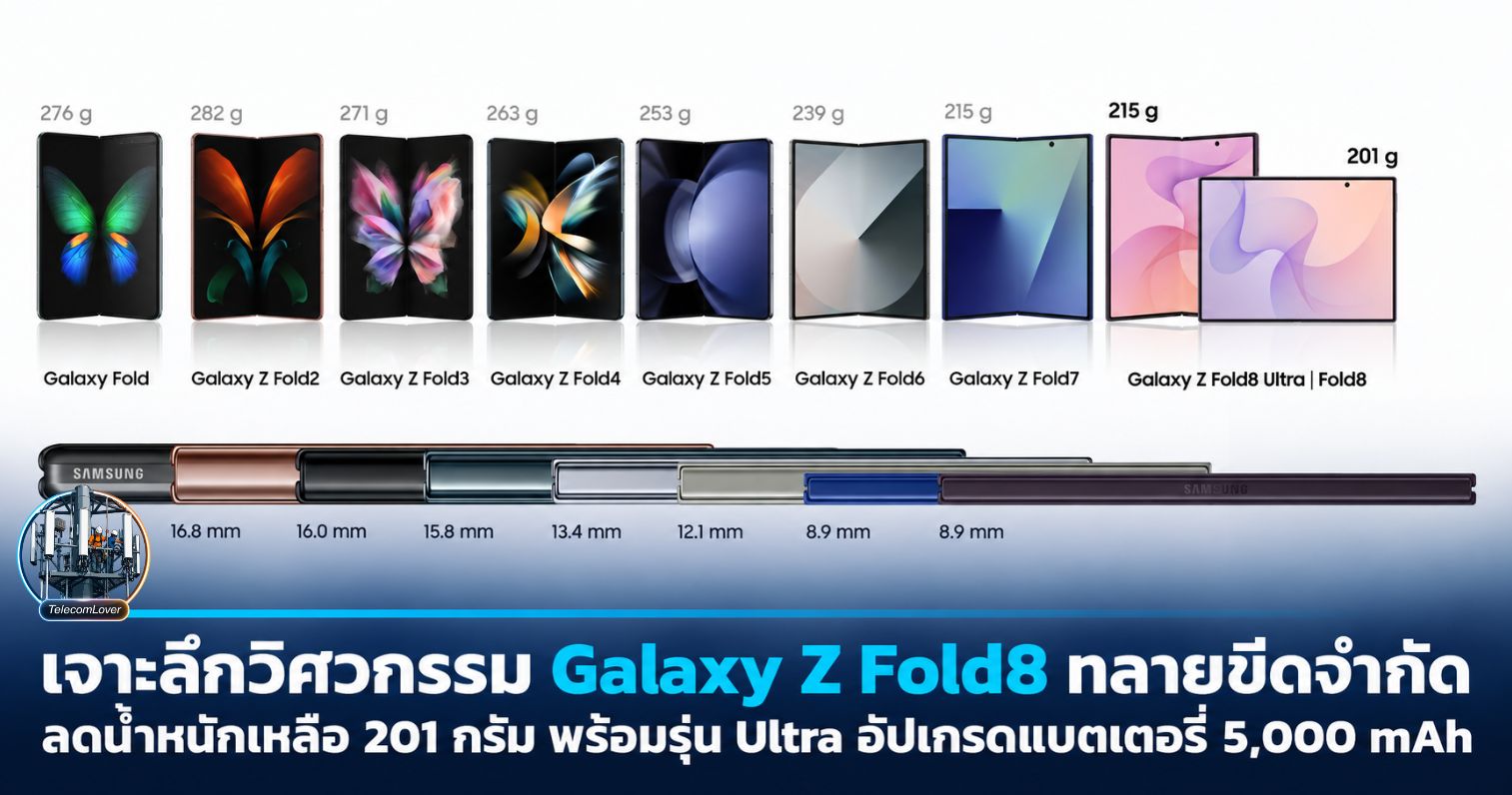
น้ำหนักของมือถือจอพับตระกูลนี้ลดลงจาก Galaxy Fold รุ่นแรกในปี 2019 ที่ 276 กรัม มาเป็น Galaxy Z Fold5 ที่ 253 กรัม, Galaxy Z Fold6 ที่ 239 กรัม และ Galaxy Z Fold7 ที่ 215 กรัม ก่อนจะเหลือ 201 กรัมใน Galaxy Z Fold8 ซึ่ง Samsung ระบุว่าเป็นมือถือจอพับที่เบาที่สุดในโลก โดยตัวเครื่องมีความบาง 9.7 มิลลิเมตร ส่วน Galaxy Z Fold8 Ultra บาง 8.9 มิลลิเมตร
หนึ่งในเทคโนโลยีสำคัญคือ Flex Titanium ที่ใช้ฟิล์มโลหะผสมไทเทเนียมเสริมโครงสร้างหน้าจอพับของ Galaxy Z Fold8 และ Galaxy Z Fold8 Ultra ฟิล์มนี้หนาเพียงไม่กี่สิบไมโครเมตร หรือประมาณหนึ่งในสามของความหนาเส้นผมมนุษย์ ขณะที่แผ่นโลหะรองรับหน้าจอบางส่วนมีความหนาประมาณ 0.2 มิลลิเมตร และบางจุดเหลือ 0.15 มิลลิเมตร
ความบางดังกล่าวทำให้ Samsung ต้องปรับกระบวนการขึ้นรูปโลหะ ทั้งเครื่องมือ ลำดับการผลิต และสภาวะการหล่อเย็น เพื่อควบคุมความเรียบและลดโอกาสบิดงอที่อาจกระทบการประกอบหรือพื้นผิวหน้าจอ ส่วนบานพับออกแบบให้เหมาะกับโครงสร้างของแต่ละรุ่น โดยคำนึงถึงการกระจายแรง ความแข็งแรง พื้นที่ภายใน และน้ำหนักร่วมกัน
ด้านวัสดุ เฟรมตัวเครื่องใช้ Advanced Armor Aluminum พร้อมเลือกกราไฟต์ที่ถ่ายเทความร้อนได้ดีขึ้น และนำ Clad Metal ซึ่งผสานคุณสมบัติของโลหะต่างชนิดมาใช้บริเวณฝาหลัง เพื่อช่วยลดน้ำหนักและรักษาประสิทธิภาพการระบายความร้อน
การปรับรายละเอียดภายในครอบคลุมแผงวงจรพิมพ์หรือ PCB และเสาอากาศ MFC (Magnetic Flux Channel) เพื่อลดพื้นที่ซ้อนทับกับชิ้นส่วนรอบข้าง รวมถึงตัดชิ้นส่วนประกอบย่อยออกประมาณ 15 ชนิด ปรับรูปทรงชิ้นส่วนที่เหลือ และรวมบางชิ้นเข้าเป็นโครงสร้างเดียวกัน เพื่อประหยัดทั้งน้ำหนักและพื้นที่
Galaxy Z Fold8 Ultra แสดงผลของแนวทางนี้ผ่านแบตเตอรี่ 5,000 mAh ที่เพิ่มจาก 4,400 mAh ของ Galaxy Z Fold7 ขณะที่น้ำหนักตัวเครื่องยังเท่ากันที่ 215 กรัม แม้แบตเตอรี่ใหม่จะหนักขึ้นประมาณ 6 กรัม ทีมพัฒนาชดเชยด้วยการลดน้ำหนักจากวัสดุ โครงสร้าง และชิ้นส่วนอื่นทั่วทั้งเครื่อง
Galaxy Z Fold8 Ultra ยังเพิ่มปริมาตรชั้นกราไฟต์ระบายความร้อนประมาณ 7% เมื่อเทียบกับ Galaxy Z Fold7 พร้อมกล้องหลัก 200 MP และกล้อง Ultra-Wide 50 MP ซึ่งเป็นครั้งแรกของตระกูล Galaxy Z Fold โดย Samsung นำพื้นที่และน้ำหนักที่ประหยัดได้กลับมาใช้กับแบตเตอรี่ กล้อง และระบบระบายความร้อน เพื่อให้มือถือจอพับพกพาสะดวกขึ้นพร้อมรองรับคุณสมบัติระดับเรือธง
Samsung Details How Galaxy Z Fold8 Reached 201 Grams Through Component-Level Weight Savings
Samsung has detailed the engineering behind the 201-gram Galaxy Z Fold8, which weighs 52 grams less than the Galaxy Z Fold5. The changes span the display structure, hinge, materials and internal layout. Engineers reviewed approximately 270 components and more than 180 types of subsidiary parts, achieving weight reductions as small as 0.001 grams on some parts.
The series has become progressively lighter, from the original Galaxy Fold at 276 grams in 2019 to the Galaxy Z Fold5 at 253 grams, the Galaxy Z Fold6 at 239 grams and the Galaxy Z Fold7 at 215 grams. The Galaxy Z Fold8 now weighs 201 grams, making it the world’s lightest foldable smartphone, according to Samsung. It measures 9.7 millimetres thick, while the Galaxy Z Fold8 Ultra measures 8.9 millimetres.
A key technology is Flex Titanium, which incorporates a titanium alloy film into the folding display structure of the Galaxy Z Fold8 and Galaxy Z Fold8 Ultra. The film is only a few tens of micrometres thick, approximately one-third the thickness of a human hair. Some metal display support sections measure around 0.2 millimetres thick, narrowing to 0.15 millimetres in certain areas.
These dimensions required Samsung to revise its metal-forming processes, including tooling, production sequences and cooling conditions, to maintain flatness and reduce warping that could affect assembly or the display surface. Hinges were designed for each model’s structure, balancing force distribution, strength, internal space and weight.
The frame uses Advanced Armor Aluminum, while higher-performance graphite helps transfer heat. Samsung also uses Clad Metal, which combines properties of different metals, around the rear cover to reduce weight while maintaining heat dissipation.
Internal revisions include redesigned printed circuit boards (PCBs) and MFC (Magnetic Flux Channel) antennas to reduce overlap with surrounding components. Engineers also removed approximately 15 types of subsidiary parts, reshaped remaining parts and consolidated some into single structures to save weight and space.
The Galaxy Z Fold8 Ultra demonstrates the result with a 5,000 mAh battery, up from the Galaxy Z Fold7’s 4,400 mAh capacity, while retaining the same 215-gram device weight. Although the larger battery weighs approximately six grams more, engineers offset that increase through savings across materials, structures and other components.
The Galaxy Z Fold8 Ultra also increases the volume of its graphite cooling layer by approximately 7% compared with the Galaxy Z Fold7. It features a 200 MP main camera and the Galaxy Z Fold series’ first 50 MP ultra-wide camera. Samsung has used the recovered space and weight allowance for batteries, cameras and cooling, aiming to make foldables easier to carry while accommodating flagship features.