



ETDA เผย 1212 ETDA รับเรื่องร้องเรียนออนไลน์ 23,525 เรื่องใน 8 เดือน ลด 14.06% แต่ปัญหาแพลตฟอร์มเพิ่ม 42.95% ขณะที่ Gen X–Y รวมกัน 72.23%
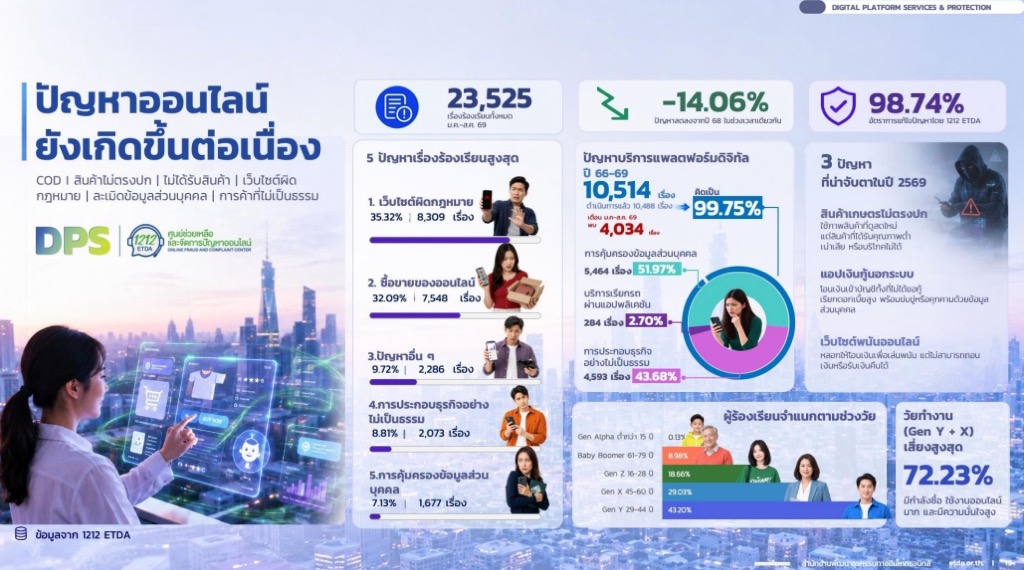
ETDA เปิดสถิติศูนย์ช่วยเหลือและจัดการปัญหาออนไลน์ 1212 ETDA ช่วงเดือนมกราคม–สิงหาคม 2569 พบเรื่องร้องเรียนรวม 23,525 เรื่อง ลดลง 3,850 เรื่อง หรือ 14.06% จากช่วงเดียวกันของปี 2568 แต่ปัญหาที่เกี่ยวข้องกับบริการแพลตฟอร์มดิจิทัลกลับเพิ่มขึ้น 42.95% เป็น 4,034 เรื่อง
เว็บไซต์ผิดกฎหมายขึ้นเป็นปัญหาที่ได้รับการร้องเรียนมากที่สุด 8,309 เรื่อง คิดเป็น 35.32% ตามด้วยปัญหาซื้อขายออนไลน์ 7,548 เรื่อง หรือ 32.09% ปัญหาอื่น ๆ และการสอบถามข้อสงสัย 2,286 เรื่อง ปัญหาการประกอบธุรกิจอย่างไม่เป็นธรรม 2,073 เรื่อง และปัญหาคุ้มครองข้อมูลส่วนบุคคล 1,677 เรื่อง

ดร.ชัยชนะ มิตรพันธ์ ผู้อำนวยการ ETDA ระบุว่า เมื่อพิจารณาข้อมูลบริการแพลตฟอร์มดิจิทัลที่เก็บสะสมตั้งแต่ปี 2566–2569 พบเรื่องร้องเรียนรวม 10,514 เรื่อง โดยดำเนินการแก้ไขแล้ว 10,488 เรื่อง หรือ 99.75%
ในจำนวนดังกล่าว ปัญหาด้านการคุ้มครองข้อมูลส่วนบุคคลมีสัดส่วนสูงสุด 5,464 เรื่อง หรือ 51.97% ตามด้วยการประกอบธุรกิจอย่างไม่เป็นธรรม 4,593 เรื่อง หรือ 43.68% และปัญหาบริการเรียกรถผ่านแอปพลิเคชัน 284 เรื่อง หรือ 2.70%
เมื่อจำแนกผู้ร้องเรียนตามช่วงวัยจากข้อมูลสะสมระหว่างปี 2566–2569 พบว่า Gen Y อายุ 29–44 ปี มีสัดส่วนสูงสุด 43.20% ตามด้วย Gen X อายุ 45–60 ปี ที่ 29.03% ทำให้สองกลุ่มวัยทำงานมีสัดส่วนรวมกันถึง 72.23%
ส่วน Gen Z อายุ 16–28 ปี มีสัดส่วน 18.66% กลุ่ม Baby Boomer อายุ 61–79 ปี อยู่ที่ 8.98% และ Gen Alpha อายุต่ำกว่า 15 ปี มีสัดส่วน 0.13% โดย ETDA มองว่าสัดส่วนที่สูงของวัยทำงานสัมพันธ์กับการใช้บริการดิจิทัลและทำธุรกรรมออนไลน์เป็นประจำ จึงมีโอกาสพบทั้งการหลอกซื้อขายสินค้า การละเมิดข้อมูล และลิงก์ปลอมมากขึ้น
ปัญหาซื้อขายออนไลน์ยังเป็นปัญหาที่พบมากที่สุดในผู้ร้องเรียนทุก Generation ส่วนใหญ่เกิดจากการชำระเงินแล้วไม่ได้รับสินค้า สินค้าไม่ตรงกับรายละเอียดหรือโฆษณา คุณภาพไม่เป็นไปตามข้อตกลง รวมถึงการโอนเงินแล้วไม่สามารถติดต่อผู้ขายได้
ETDA ระบุด้วยว่า AI เริ่มถูกนำมาใช้สร้างภาพและข้อมูลประกอบให้สินค้าหรือข้อเสนอดูน่าเชื่อถือเกินจริง เพิ่มความซับซ้อนให้กับการหลอกลวงผ่านอีคอมเมิร์ซและโซเชียลมีเดีย
รูปแบบที่ต้องจับตาในปี 2569 ครอบคลุมการขายผลไม้และสินค้าเกษตรตามฤดูกาลที่ใช้ภาพสวยจูงใจ แต่สินค้าที่ได้รับกลับเน่าเสียหรือไม่มีคุณภาพ แอปเงินกู้ที่โอนเงินเข้าบัญชีทั้งที่ผู้เสียหายไม่ได้ยื่นกู้ ก่อนเรียกดอกเบี้ยสูงและข่มขู่ ตลอดจนเว็บไซต์พนันออนไลน์ที่ชักชวนให้โอนเงินแต่ไม่สามารถถอนเงินคืนได้
“แม้เรื่องร้องเรียนโดยรวมจะลดลง แต่การเพิ่มขึ้นของปัญหาบริการแพลตฟอร์มดิจิทัลสะท้อนว่า ความเสี่ยงออนไลน์กำลังเปลี่ยนจากปัญหาเฉพาะรายไปสู่ปัญหาเชิงระบบที่เกี่ยวข้องทั้งข้อมูลส่วนบุคคล เงื่อนไขการให้บริการ ความโปร่งใสของค่าธรรมเนียม และการเยียวยาผู้ใช้บริการ” ดร.ชัยชนะกล่าว
ในช่วง 8 เดือนแรกของปี 2569 ศูนย์ 1212 ETDA ดำเนินการแก้ไขเรื่องร้องเรียนแล้ว 23,227 เรื่อง หรือ 98.74% และมีผู้ใช้บริการพึงพอใจ 96.93%

ETDA Reports 14% Drop in Online Complaints as Digital Platform Cases Surge 42.95%
Thailand’s Electronic Transactions Development Agency, or ETDA, recorded 23,525 online complaints through its 1212 ETDA Online Help and Complaint Center between January and August 2026. The total declined by 3,850 cases, or 14.06%, from the same period in 2025, while complaints involving digital platform services increased by 42.95% to 4,034 cases.
Illegal websites became the largest complaint category with 8,309 cases, accounting for 35.32% of the total. Online shopping followed with 7,548 cases, or 32.09%, while general issues and enquiries accounted for 2,286 cases. Unfair business practices generated 2,073 complaints, and personal data protection issues accounted for 1,677.

Dr. Chaichana Mitrpant, Executive Director of ETDA, said cumulative data collected on digital platform services between 2023 and 2026 showed 10,514 complaints. Of these, 10,488 cases, or 99.75%, had been addressed.
Personal data protection was the largest category within accumulated platform complaints, accounting for 5,464 cases or 51.97%. It was followed by unfair business practices with 4,593 cases or 43.68%, and ride-hailing application issues with 284 cases or 2.70%.
An age breakdown of complainants from 2023–2026 showed that Gen Y users aged 29–44 represented the largest group at 43.20%, followed by Gen X users aged 45–60 at 29.03%. Together, the two working-age groups accounted for 72.23% of all complainants.
Gen Z users aged 16–28 represented 18.66%, Baby Boomers aged 61–79 accounted for 8.98%, and Gen Alpha users under 15 represented 0.13%. ETDA linked the high proportion among working-age users to their frequent use of digital services and online transactions, increasing their exposure to shopping scams, data misuse and fraudulent links.
Online shopping was the most commonly reported problem across all five generations. Cases included payments made without receiving goods, products that differed from their descriptions or advertisements, substandard items and sellers becoming unreachable after receiving payment.
ETDA also noted that artificial intelligence is increasingly being used to generate convincing product images and supporting information, making scams conducted through e-commerce platforms and social media more sophisticated.
Emerging risks in 2026 include seasonal fruit and agricultural product scams using attractive images to sell spoiled or poor-quality goods, loan applications that transfer money to victims without a request before demanding excessive interest, and online gambling websites that prevent users from withdrawing deposited funds.
“Although the total number of complaints has declined, the increase in digital platform service issues shows that online risks are shifting from isolated incidents toward systemic problems involving personal data, service conditions, fee transparency and user remedies,” Dr. Chaichana said.
During the first eight months of 2026, 1212 ETDA resolved 23,227 complaints, representing 98.74% of all cases received. User satisfaction with the service stood at 96.93%.