

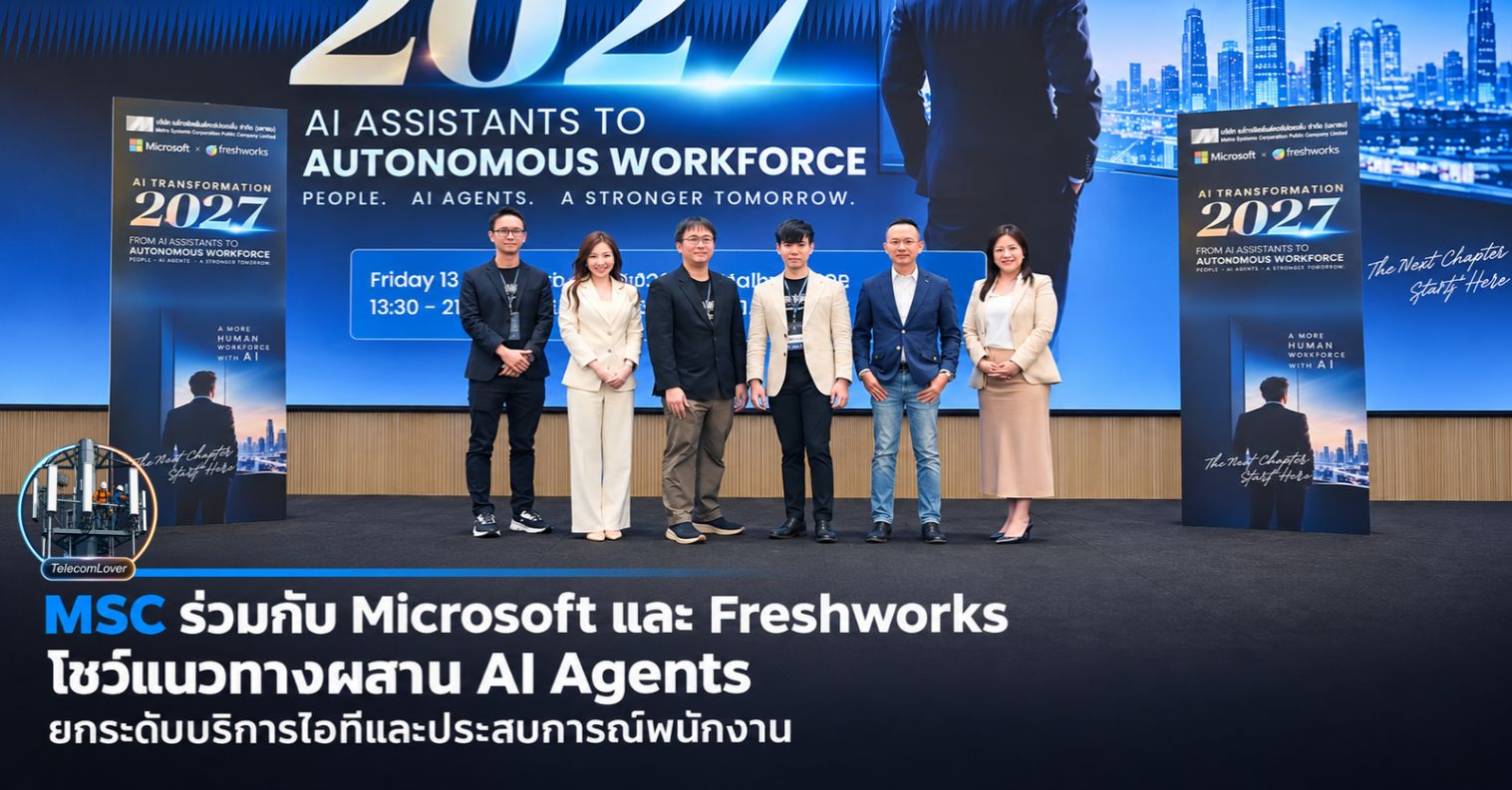
MSC จัดงาน AI Transformation 2027 ชี้ทิศทางองค์กรปี 2027 ต้องบริหาร Human Workforce ควบคู่ AI Workforce และ AI Operations พร้อมวิเคราะห์สาเหตุที่กว่า 60% ยังสร้างมูลค่าจาก AI ไม่สำเร็จ
บริษัท เมโทรซิสเต็มส์คอร์ปอเรชั่น จำกัด (มหาชน) หรือ MSC จัดงานสัมมนา “AI Transformation 2027: From AI Assistants to Autonomous Workforce” เมื่อวันศุกร์ที่ 13 พฤศจิกายน 2569 ณ ห้อง Ballroom 2B โรงแรม The Ritz-Carlton, Bangkok ชวนผู้นำธุรกิจ และผู้บริหารด้านไอที มองทิศทางการทำงานในปี 2027 ที่ AI ไม่ได้เป็นเพียงผู้ช่วยตอบคำถามอีกต่อไป แต่กำลังก้าวสู่การเป็นเพื่อนร่วมงาน (AI Coworker) ผ่านการบรรยาย เวทีเสวนา และบูธเทคโนโลยี โดยโจทย์สำคัญไม่ใช่ “จะเริ่มใช้ AI อย่างไร” แต่คือ “จะทำให้ AI สร้างผลลัพธ์ทางธุรกิจได้จริงและขยายผลได้ในระดับองค์กรอย่างไร”
ภายใต้แนวคิด AI Workforce งานนำเสนอเส้นทางการเปลี่ยนบทบาทของ AI จาก AI Assistant สู่ AI Coworker และ Enterprise AI Agents หรือระบบ AI ที่รับมอบหมายงาน ทำงานข้ามระบบ และเชื่อมต่อกระบวนการทางธุรกิจได้ โดยมีมุมมองว่า องค์กรในปี 2027 จะไม่ได้บริหารเพียงกำลังคน แต่ต้องบริหาร Human Workforce, AI Workforce และ AI Operations ไปพร้อมกัน พร้อมให้ความสำคัญกับการกำหนดขอบเขตการทำงานและการกำกับดูแลอย่างเหมาะสม
ผู้เข้าร่วมงานได้อัปเดตทิศทางล่าสุดของ Microsoft 365 Copilot ทั้ง Cowork และ Autopilot รวมถึงแนวทางสร้าง Enterprise AI Agents ด้วย Copilot Studio และ Power Platform เพื่อเชื่อม AI เข้ากับงานขององค์กร ควบคู่กับประเด็นที่ผู้บริหารให้ความสนใจอย่างมากในยุค AI at Scale คือการบริหารต้นทุนและการวัดผลลัพธ์ผ่านแนวคิด AI FinOps เพื่อให้การลงทุนและการขยายการใช้งานสอดคล้องกับเป้าหมายธุรกิจ
อีกหนึ่งประเด็นที่ถูกหยิบยก คือ “คำถามที่หลายองค์กรกำลังเผชิญ ว่าเหตุใดกว่า 60% ขององค์กรยังไม่สามารถสร้างมูลค่าจาก AI ได้สำเร็จ” การบรรยายชี้ช่องว่างระหว่างการมีเทคโนโลยีกับการนำไปใช้ในงานจริง หรือ Last Mile Trap พร้อมชวนพิจารณาความคุ้มค่าและวิธีวัดผลควบคู่กับปัญหา Data Debt และ Semantic Gap หรือข้อมูลที่สะสมและช่องว่างด้านความหมายของข้อมูล รวมถึงการกำกับดูแลข้อมูลและ AI เพื่อให้การขยายผลจากโครงการนำร่องสู่ระดับองค์กรเชื่อมโยงกับเป้าหมายธุรกิจ
เวทีเสวนา “AI Workforce in Action” ตั้งคำถามว่า AI ทำงานแทนมนุษย์ได้เพียงใด โดยย้ำบทบาทและความรู้ของบุคลากรในการทำงานร่วมกับ AI พร้อมกรณีศึกษาที่เห็นภาพชัดในงานบริการช่วยเหลือผู้ใช้งานไอที บริการที่พนักงานเข้าถึงได้ด้วยตนเอง การปฏิบัติการไอที และกระบวนการทำงานอัตโนมัติ ซึ่งเป็นตัวอย่างการเปลี่ยนจากบริการไอทีแบบดั้งเดิมสู่การให้บริการที่มี AI เป็นด่านหน้า
นอกจากนี้ มีการบรรยายเรื่องการผสาน Freshworks เข้ากับ AI เพื่อยกระดับประสบการณ์ของพนักงาน (Employee Experience) ให้เข้าถึงความช่วยเหลือได้รวดเร็วผ่านบทสนทนา ลดภาระทีมบริการ ภายในงานยังมีบูธ Microsoft, Freshworks และบริการ Outsource เปิดโอกาสให้ผู้เข้าร่วมแลกเปลี่ยนโจทย์และแนวทางประยุกต์ใช้เทคโนโลยีกับทีมงานโดยตรง
ช่วงท้ายของงานสรุปการเปลี่ยนผ่านจาก Digital Transformation สู่ AI Transformation และความสามารถหลักที่องค์กรต้องเตรียมให้พร้อมเพื่อแข่งขันในปี 2027 ได้แก่ กลยุทธ์ ข้อมูล แพลตฟอร์ม การกำกับดูแล และบุคลากร พร้อมชวนพิจารณาว่า ในบรรดา AI หลายระบบที่องค์กรใช้ ระบบใดสร้างคุณค่าให้กับงานจริง รวมถึงทิศทางบริการด้านไอทีสู่ AI Managed Operations หรือการบริหารงานไอทีโดยมี AI สนับสนุน
สาระจากงานจึงเชื่อมการเลือกใช้เครื่องมือเข้ากับความพร้อมของข้อมูล ความรู้ของบุคลากร การวัดผล และการกำกับดูแล เพื่อเป็นแนวทางวางแผนการทำงานร่วมกันระหว่างคนกับ AI สำหรับปี 2027 และเมื่อมี AI Agent เพิ่มขึ้นในองค์กร ควรมองเห็นและกำกับดูแลการใช้งานทั้งหมด พร้อมให้ความสำคัญกับความปลอดภัยของข้อมูล (Data Security) และความปลอดภัยของระบบ AI (AI Security) ควบคู่กัน
MSC Hosts AI Transformation 2027, Urging Organizations to Manage Human and AI Workforces Together as Over 60% Struggle to Capture AI Value
Metro Systems Corporation Public Company Limited (MSC) hosted its seminar “AI Transformation 2027: From AI Assistants to Autonomous Workforce” on November 13, 2026 at The Ritz-Carlton, Bangkok, outlining how enterprises must prepare to manage human employees alongside autonomous AI agents by 2027.
Centered on the AI Workforce concept, the event examined the shift of artificial intelligence from basic question-answering assistants to AI coworkers and Enterprise AI Agents capable of executing assigned tasks across systems and connecting business processes. MSC emphasized that by 2027, organizations will need to manage Human Workforce, AI Workforce, and AI Operations simultaneously with clear operational boundaries and governance.
Sessions covered updates on Microsoft 365 Copilot, including Cowork and Autopilot, alongside building Enterprise AI Agents with Copilot Studio and Power Platform. To address cost management and return on investment at scale, speakers introduced AI FinOps frameworks to align AI spending and deployment with business goals.
The seminar also examined why more than 60 percent of organizations have yet to generate tangible value from AI, pointing to the “Last Mile Trap” between technology adoption and real-world workflow integration, accumulated “Data Debt,” semantic gaps in enterprise data, and insufficient AI and data governance.
During the “AI Workforce in Action” panel, speakers highlighted practical use cases in IT helpdesk support, employee self-service, IT operations, and workflow automation, emphasizing human oversight and staff readiness. Another session demonstrated integrating Freshworks with AI to streamline employee assistance through conversational interfaces, supported by technology booths from Microsoft, Freshworks, and outsource service teams.
Concluding the event, MSC outlined five core capabilities required for enterprise competitiveness in 2027—strategy, data, platform, governance, and talent—while underscoring the transition toward AI Managed Operations, centralized visibility over proliferating AI agents, and combined Data Security and AI Security measures.